Housewarming Gift Ideas for Every Budget and Taste
Summary
The best housewarming gift ideas are either consumable and genuinely good, or distinctive enough to earn a permanent spot. Food gifts organized by budget ($25 to $200) work because they skip the decor guessing game. Personalized items land when tied specifically to the new address or move date. We skip the cheese boards and generic hampers, and lay out what we would actually bring, tier by tier.
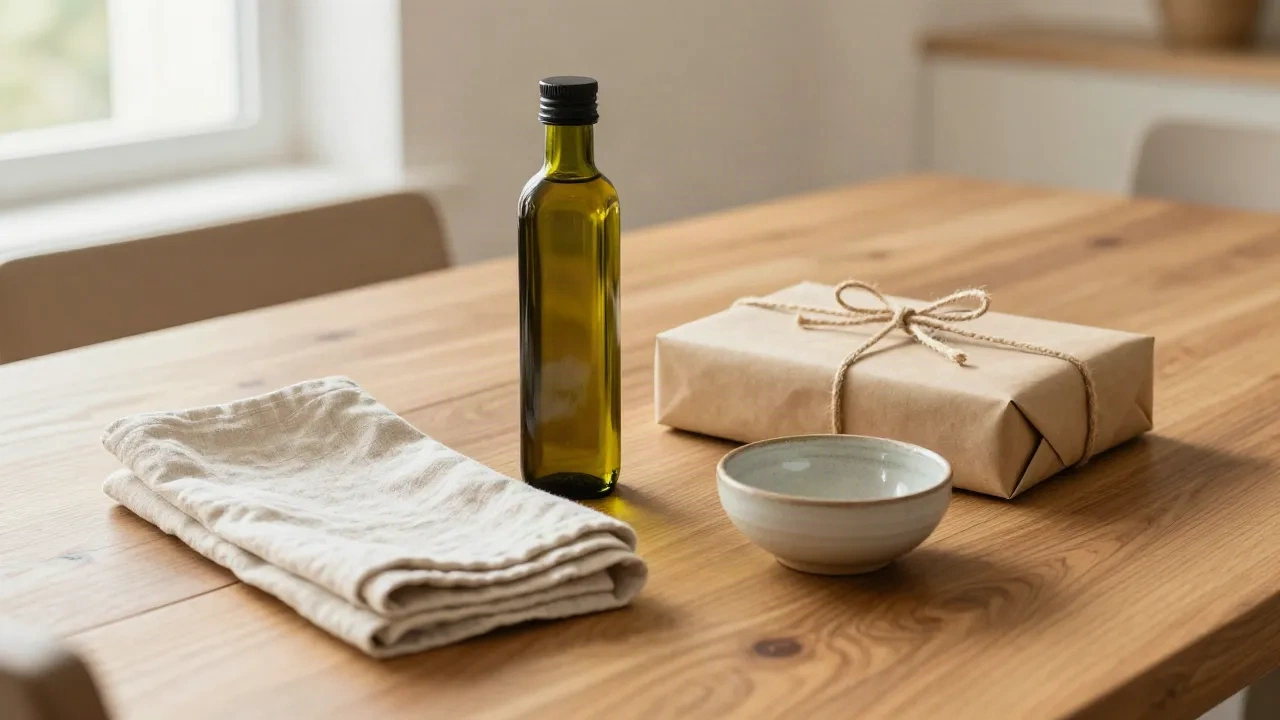
Most housewarming gift ideas fall into one of two failure modes. The first: something so generic (candles, wine, a cutting board) that the recipient unpacks their fourth identical one before the week is out. The second: something so personal it misses entirely because you guessed at their aesthetic and guessed wrong. Here is what we have found actually works, built around three budget tiers, the type of home they are moving into, and the one category that almost never fails.
What separates a gift they keep from one they donate
A housewarming gift has one job: to be useful in the life the recipient is now building. That sounds obvious, but it rules out a surprising number of items most of us reach for automatically.
The mistake most people make is buying for the home they imagine the recipient is moving into, not the home they are actually moving into. A young couple buying their first place together has very different needs from a friend who is upgrading from an apartment to a house. The first couple may genuinely need a good cutting board or quality bed linens. The second already owns three cutting boards and has strong opinions about thread counts.
The best housewarming gifts are either consumable (they use it up and remember you fondly) or genuinely distinctive (something they would not have bought for themselves). Everything in the middle, the generic decor, the vague "something for the kitchen," tends to circulate through donation piles until it disappears.
One more thing worth noting: presentation matters more than most people expect. A beautifully wrapped modest gift outperforms an unwrapped expensive one consistently. A simple kraft paper wrap with twine costs almost nothing and does real work.
The three budget tiers that cover every situation
Knowing what to spend is half the battle, and most guides skip over this entirely.
$25 to $45: This is the casual-friend tier. A bottle of very good olive oil (Kosterina, Graza, or a small-batch local press) clears this bar with room to spare, and it doubles as something they will actually use in the first week. A high-quality beeswax candle in a reusable ceramic vessel, around $38, is another reliable pick. The vessel stays long after the candle is gone. Avoid the $25 wine-and-cheese-board combo that looks generous but rarely is.
$60 to $90: This tier rewards specificity. A Goldbelly food delivery from a standout restaurant, especially if you know where the person used to live, is genuinely thoughtful and arrives beautifully boxed. A quality door mat (around $75 from Chilewich or Crate and Barrel) is practical, well-designed, and something most people delay buying for months. So is a good mixing bowl set, the kind with a pour spout and a rubber base that actually stays on the counter.
$120 to $200: At this level, you are buying something they would not splurge on themselves. A quality carbon steel pan, around $130 to $160, lands here. Worth the splurge if you know they cook and have not already upgraded their cookware. At the higher end, Goldbelly's regional sampler boxes run $95 to $180 depending on the vendor and make an outstanding gift for anyone who cooks seriously.

Food and drink: the category that almost never misses
There is a reason food and drink gifts persist as the default option: they are consumable, they do not require knowing someone's taste in home decor, and they are almost always welcome in the first chaotic weeks of a move.
The key is quality over volume. A large hamper stuffed with twenty items in crinkle paper looks impressive and contains about $4 worth of actual food. What lands better: a single bottle of genuinely good olive oil, properly sourced from a small producer, with a handwritten note about how you use it. Or one outstanding item from Goldbelly, shipped from the actual source, whether that is a dozen bagels from an iconic New York shop or a smoked fish box from the Pacific Northwest.
This works because the gift communicates that you paid attention to something specific, not just that you bought something. The person opening a Goldbelly box from a restaurant they love knows that someone thought specifically about them. The person opening a generic hamper knows that someone needed to buy a housewarming gift.
One category to handle with care: wine. It is the other default option, and it runs the same risk as the generic candle. If you know exactly what they drink, a specific bottle works well. If you do not know, a good food delivery beats a guessed wine every single time.
Skip if the recipient has dietary restrictions you are not certain about. In that case, a consumable non-food option, a very good soap from a small maker or a quality linen spray, is a safer choice.

For the move-up buyer who already has everything
This is the housewarming scenario that rarely gets discussed, but it is increasingly common: your friend is moving into their third or fourth home. They have been through the starter apartment, the first purchase, the upgrade. They own every kitchen tool they wanted. Their bedding is sorted. They do not need a cutting board.
For this recipient, the most useful frame is experiences rather than objects. A curated dinner delivery from a new restaurant in their neighborhood, a quality subscription they can cancel if they do not connect with it, or a gift card to a marketplace that lets them choose something specific to the new space.
UncommonGoods works particularly well here because it curates for people who have seen most things. Their selection skews toward craft, small-production, and the genuinely unusual in a way that Etsy's broader catalog does not. The prices are higher, but the curation removes the problem of searching through thousands of listings to find the two worth buying.
The safest and most appreciated gift for the move-up buyer is almost always something consumable and genuinely high quality. Not a token. A bottle of aged balsamic from Modena, a box of serious chocolates, a beautiful candle in a vessel that becomes a bud vase. These land because they do not add to the clutter problem the person already has.
Skip the cheese board (and what to bring instead)
The cheese board has become the housewarming equivalent of a birthday card that says "Happy Birthday." It signals effort without making any. The slate slab, the ceramic knives, the small jam jars: the recipient probably already has two of these, and the third goes straight to the back of the highest shelf.
The same logic applies to: generic wicker baskets filled with tissue paper, print art that nods vaguely at "home," and any reed diffuser set that comes in a pack of six. These are gifts that communicate good intentions while avoiding any actual thought about the specific person.
Here is what to bring instead if you are working with a limited budget: something consumable and specific ($30 to $40, a single great item, well wrapped), or something functional and understated. A quality door stopper. A small flashlight for the new place. A set of drawer organizers from a brand that actually cares about the object. The functional gifts feel anticlimactic to buy and land surprisingly well because they show you thought about what it is actually like to live in the place.
One more skip: plants, unless you know for certain the recipient keeps plants and actively wants more. Moving is already chaotic. Handing someone a living thing that needs water and light during their first week in a new space is an optimistic ask. Cacti and air plants are the exception, but even then: ask first.

Personalized gifts: when they actually work
Personalized gifts have a reputation problem, and some of it is earned. The market for engraved, monogrammed, and custom-printed items has expanded so quickly that the signal of personalization has diluted. A cutting board with their last name laser-etched onto it no longer says "I thought about you specifically." It says "I found a same-day personalized option online."
That said, personalization still works well in two specific situations. The first: when the customization is genuinely tied to the new address or the specific move. A custom illustration of their house, a print of the neighborhood from the date they moved in, a doormat with their last name and move-in year. These are specific to the person and the moment, not just a name printed onto something that could have gone to anyone.
The second: when the personalized object is also genuinely high quality. A set of monogrammed linen napkins from a serious textile brand carries the same value as the non-personalized version, with added meaning. The personalization is a detail, not the whole gift.
Amazon Handmade has a solid number of options here, particularly for custom prints, hand-stamped metalwork, and small-batch ceramics. Quality varies more than at a curated marketplace, but the pricing is better and the range is wider. Worth navigating if you already know specifically what you are looking for and want to avoid the curated-marketplace markup.
What we would actually bring right now
For a close friend moving into a first home: a bottle of Graza olive oil ($22), a bag of very good coffee ($18), and a handwritten note. Wrapped together, this comes in under $45 and feels personal and useful. We have brought some version of this to about seven housewarmings in the last three years and it has not missed once.
For a couple upgrading to a larger place: a Goldbelly delivery from a restaurant they used to go to in their old neighborhood, framed as one last delivery from their old address. Around $90 depending on the vendor. The specificity does the heavy lifting, and the story makes the gift land better than the food itself.
For a colleague or a more formal context: a quality scented candle in a reusable vessel, around $45 to $65. The Otherland Flea Market and the Boy Smells Cedar Stack are both solid at this price point. Neutral but not generic, and there is no risk of picking the wrong aesthetic for a home you have not seen yet.
And the one thing we would not bring: a wine and cheese board set. We have yet to meet the person who needed another one.