Secret Santa Gift Ideas We'd Actually Wrap and Send
Summary
Secret Santa exchanges work best with consumable picks that read as considered. The $20 bracket is covered by artisan food, specialty tea, or quality socks. The $30 bracket opens up candles and chocolates when you know a little more. For office draws, go for a quality travel mug or local coffee beans. Skip novelty items, strongly scented things without context, and gift cards that communicate nothing.
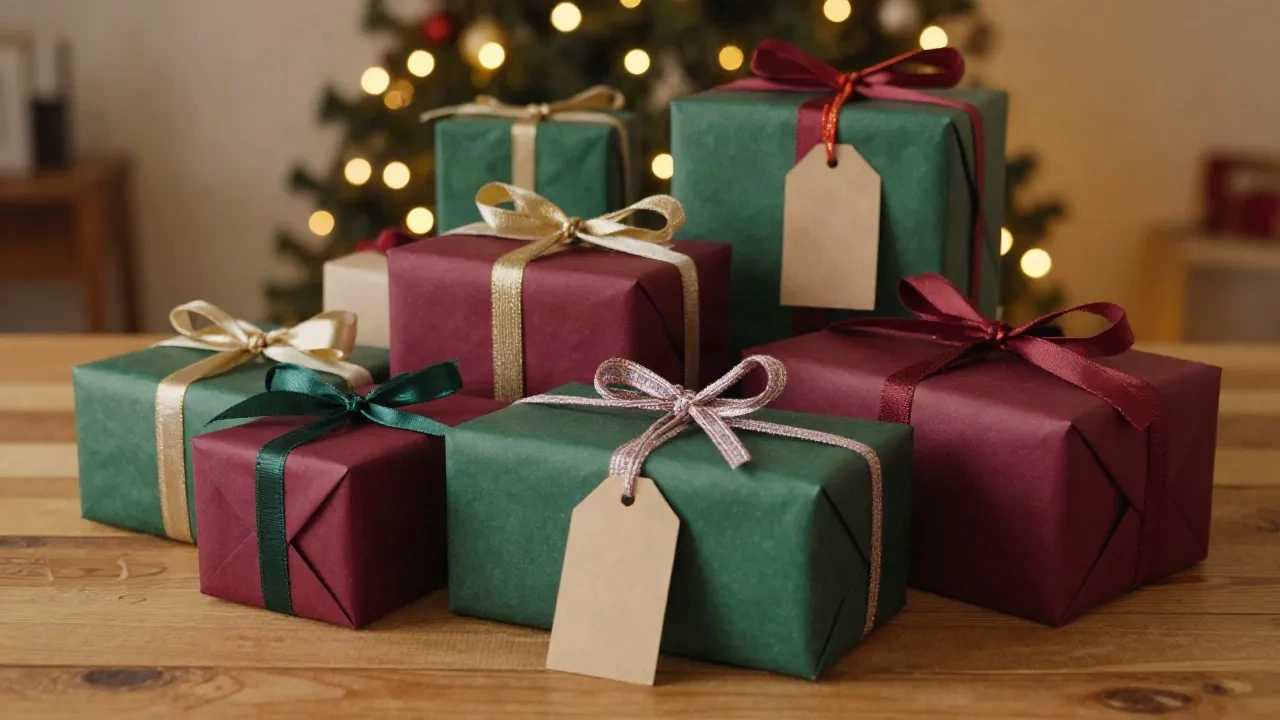
The best secret santa gift ideas are not the ones that look impressive in a cart screenshot. They are the ones that make sense for the person holding them: usable, specific, and clearly not chosen at 11pm on December 23rd. This guide covers picks across three real budget brackets ($15-$20, $25-$30, and $40-$50), a shortlist for office exchanges where you know almost nothing, and one firm opinion on when to go funny. No lists of 40. No placeholder recommendations.
What "has a budget of $20" actually means in practice
Most Secret Santa exchanges set a cap somewhere between $20 and $25. That cap is real: going significantly over it puts the recipient in an awkward spot, and going well under signals that you either forgot or did not try. The sweet spot is landing close to the cap with something that reads as considered rather than generic.
The failure mode we see most often: choosing a gift that technically fits the budget but communicates "I bought this from the first results page." A $19.99 novelty mug with a mass-printed slogan is not a $20 gift in any meaningful sense. It is a $2 object with $18 of margin baked in. You can do better without spending more.
Spend the same $20 on a small-batch hot sauce set or a well-chosen tin of loose-leaf tea and the read changes entirely. The object costs the same. The signal it sends does not.
Skip if your recipient is someone you genuinely know well. The $20 bracket works best when you have limited information. If you actually know this person, move to the next bracket.
The $20 bracket: picks that do not look cheap
These work without any knowledge of the recipient beyond "they are an adult human who uses kitchens or owns feet."
Artisan hot sauce set. A 3-pack from a small-batch brand like Bushwick Kitchen or Yellowbird runs $18-$22. The packaging reads as considered, the contents are genuinely usable, and it opens a conversation. Skip if they mentioned heat intolerance.
Specialty tea tin. Harney and Sons, Rare Tea Company, or a local importer. A single 50-gram tin of something they would not ordinarily buy themselves. Under $20, and it lasts long enough to be appreciated well past the exchange. Skip if you know they are a coffee-only household.
High-quality socks. Not the novelty kind. Bombas ankle socks (around $13 a pair) or Darn Tough merino wool socks ($20-$24) are genuinely appreciated because they are absurdly comfortable and most people do not buy them for themselves. Worth the splurge if you know they are on their feet all day.
A card game that plays fast. Blink, Taco Cat Goat Cheese Pizza, or Sushi Go. Under $12, universal appeal, plays in 15 minutes. Best for younger recipients or anyone who has mentioned they like games.
The $30 bracket: when you know a little more
Once you have one small piece of information about the person, you can narrow significantly. This bracket ($25-$40) gives you room for something with texture.
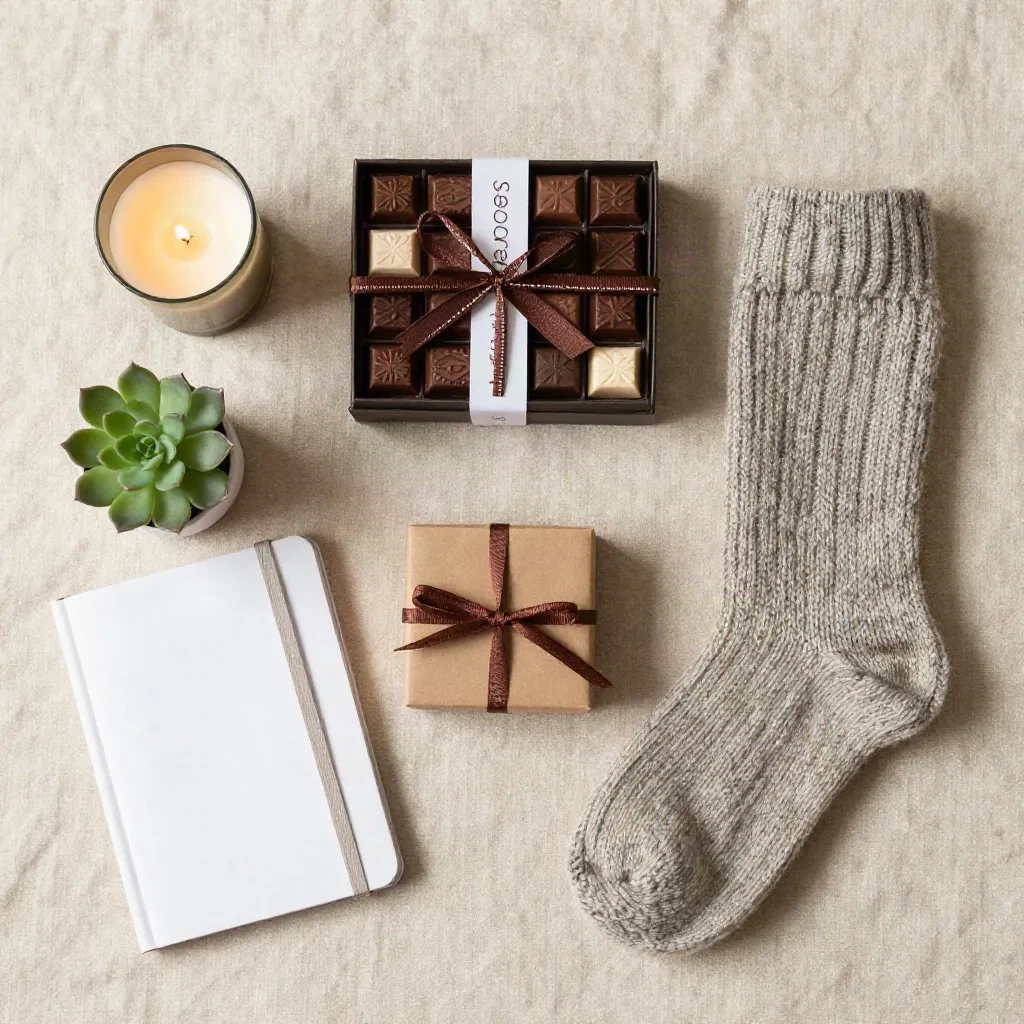
Good chocolates. Not Godiva, which is mostly packaging at this price point. Mast Brothers, Dick Taylor, or a local bean-to-bar maker. A two-bar selection runs $20-$30. Worth buying in person at a specialty shop so you can ask what is single-origin. Skip if they mentioned dietary restrictions.
A well-chosen candle. The catch is that "a candle" is also the fallback gift for people who tried nothing. The way to make it land: choose a scent that matches something specific about them (their city, a material they mentioned liking, a season they love). Malin and Goetz Dark Rum or Boy Smells' quieter options run $28-$36 and feel deliberate rather than filler. Skip if you know nothing about their scent preferences.
A small potted plant. A 4-inch succulent, a trailing pothos, or a peperomia from a local nursery. Under $15 at most nurseries, genuinely cheering, zero maintenance for most varieties. Worth spending the rest of the budget on a good pot if the nursery has them.
A quality notebook. Leuchtturm1917 or Midori MD. Under $25. Works for anyone who writes, sketches, or takes notes by hand. Skip if they are entirely digital.
For the office exchange: when you know almost nothing

The office Secret Santa is a particular format. You may know the person only by their Slack handle and the way they hold their coffee. Universally safe picks exist, and they are not the ones most people reach for first.
The formula for an office exchange: consumable, premium-feeling, no strong opinions required. This rules out candles (scent preferences are personal), anything with a slogan, and anything political or religious in tone.
What actually works:
A good travel mug is near-universal. The Zojirushi SM-SA48 (around $35) keeps coffee hot for six hours, is genuinely leak-proof, and reads as thoughtful without being personal. It is one of the few object gifts that works for people who already have everything.
Specialty coffee beans from a local roaster work well in any office where coffee is part of the culture. A 250g bag from a respected roaster, labeled with the origin and processing method, is $12-$18 and signals real thought. Pair it with a handwritten note.
A themed snack hamper built around one flavor profile works better than a generic assortment box. Pick one direction (smoky and savory, or sweet and spicy) and build four or five small items around it. It reads as curated even if it took 20 minutes at a specialty grocery.
Skip if you are attending a formal gifting event with senior colleagues. In that context, choose something with no personality at all: a quality hand cream (Aesop, L'Occitane), a high-end pen (Lamy Safari, around $25), or a restaurant gift card for somewhere specific they mentioned wanting to try. The goal in formal settings is to not create a moment.
The case for something edible (it is almost always right)
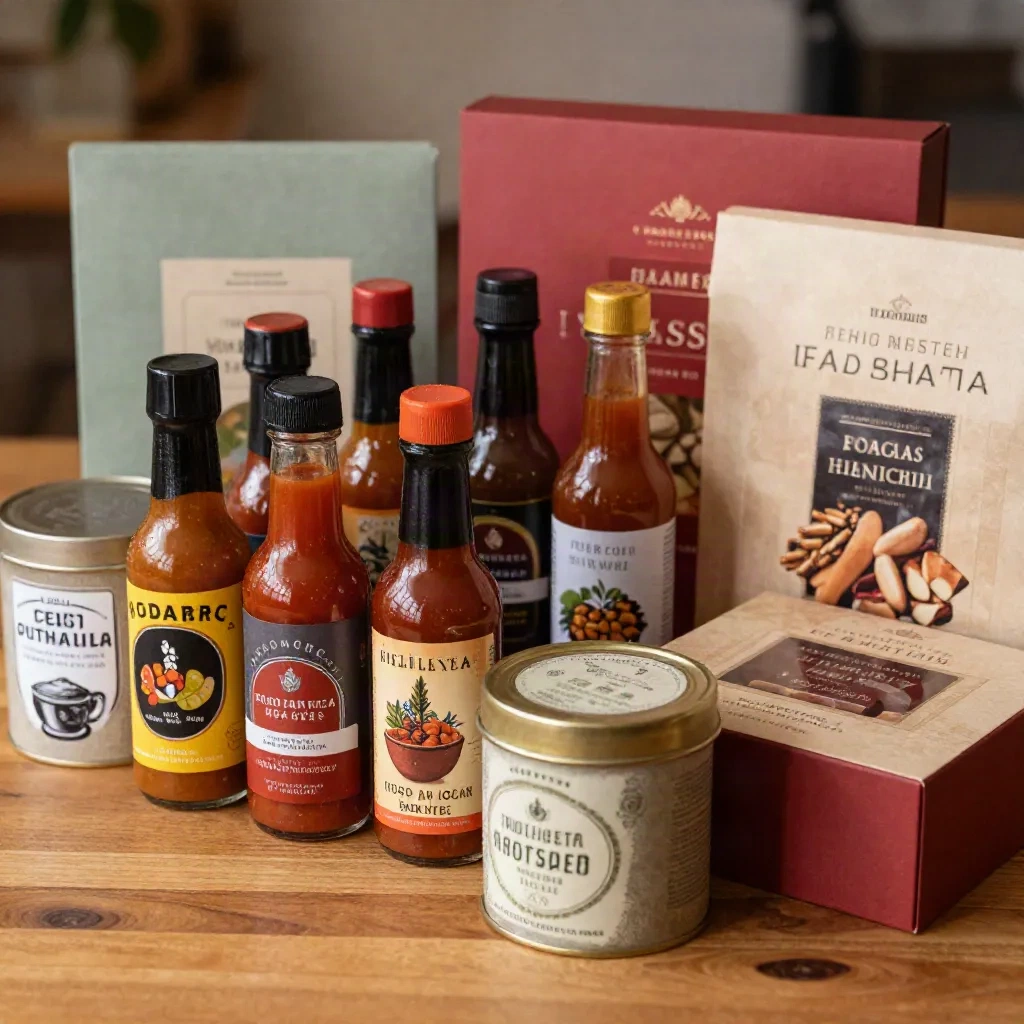
Food gifts have a quiet structural advantage: they are consumed and do not become clutter. No one has to find a shelf for artisan jam. No one feels guilty discarding a specialty snack they did not love. And the pleasure, when it lands, is immediate.
The rule we apply here: choose something edible that they would not ordinarily buy for themselves. A jar of standard jam is not a gift. A jar of small-batch yuzu kosho from a Japanese import store is. The distance between "nice to have" and "I would not have thought to get this" is where edible gifts earn their place.
Good options in the $15-$35 range:
A selection of finishing salts from a specialty shop (black lava, smoked, fleur de sel)
A single-origin honey set from a regional producer
An artisan hot cocoa kit with proper high-grade cocoa powder, not a packet mix
Smoked charcuterie from a local butcher, vacuum-sealed and travel-ready
Worth the splurge if they are a dedicated cook: a bottle of good olive oil ($20-$30 for a first cold press) or a tin of high-grade anchovies ($12-$18). Sounds niche, but anyone who cooks will use it and notice the quality immediately.
When to go funny, and the one rule for it
The funny Secret Santa gift is a genre with real appeal and one hard rule: the gift must be genuinely funny, not merely labeled funny.
The difference is this: a mug that says "World's Best [Noun]" is not funny. It is a lazy approximation of humor. A tiny desk vacuum that genuinely works (BASEUS and BLACK+DECKER make $15-$25 versions) is funny because it is also useful. A miniature cheese board with accompanying tiny implements ($18-$22) is funny because it is excessive and precise simultaneously.
If you are going funny, the gift should land on its own without requiring you to be in the room to explain it. If you have to describe why it is amusing when you hand it over, it is not a good funny gift.
Skip if the exchange includes people you do not know well. Humor requires shared context. A joke that lands perfectly in one social group reads as baffling in another. Read the room before you read the receipt.
What to skip outright
Not everything is a gift. Some objects occupy gift-shaped space without delivering anything a recipient actually wanted.
Novelty items that require explanation. Anything that arrives with an instruction sheet for why it is clever.
Scented things without context. Unless you know their home, their preferences, and that they have no fragrance sensitivities, avoid candles, perfumes, and bath sets for people you do not know well. The good ones land beautifully. The wrong ones get quietly moved to the back of a cupboard.
Gift cards to nowhere specific. An Amazon gift card communicates that you gave up. A gift card to a bookshop they mentioned liking, or to a restaurant they have been meaning to try, is something else entirely.
Assembled baskets with no internal logic. A miniature hand sanitizer, a granola bar, and a branded highlighter arranged in tissue paper are not a gift. They are a welcome pack repurposed for the holidays.
Before you wrap it: the small detail that closes it
The wrapping matters, and not for the reasons most people assume. A neatly wrapped gift with a brief handwritten card signals that someone stopped for a moment and paid attention. It raises the perceived quality of everything inside before the paper comes off.
The handwritten card does not need to be long. Three sentences: what made you choose this, one line about the recipient, and a warm close. Four minutes. That is the whole formula. It doubles the impact of whatever is inside, and we mean that less as a metaphor than as a practical observation: people remember the attention paid, not just the money spent.
This works because handwritten notes are rare enough to read as deliberate. Typed cards and no cards are both common. A handwritten note in a gift exchange is the moment that separates a good Secret Santa from everyone else who followed the budget and called it done.
Skip the elaborate tissue paper arrangement if you are in a hurry. But do not skip the card.